Our thoughts and prayers are with Linus and his family at this difficult and tragic time.
Don’t compilers have some guarantee of behaviours? I.e even if you don’t know exactly what instructions and order the compiler generates there is a guarantee that it is computationally/mathematically equivalent to the statements you wrote. Otherwise it would be a pretty terrible compiler. That’s a pretty big jump to writing instructions you don’t understand, since LLMs can’t make the same guarantees about a prompt/request.
Yes, they are deterministic. LLMs are not.
Tell me you weren’t around for the early days of compiler development without telling me you weren’t around for the early days of compiler development…
(Actually, for niche architectures LLVM is also pretty bug-riddled. Maybe with AI we can finally fix some of that.)
I don’t know… tools made by companies who can’t wait to get in bed with the Pentagon to kill brown people around the world would seem to be toxic af.
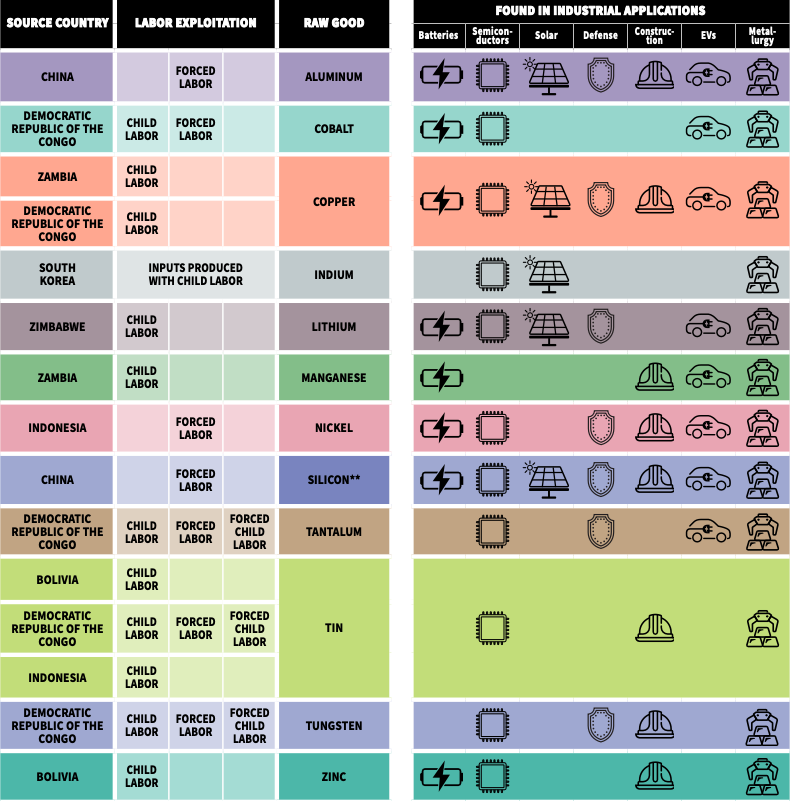
If we’re playing the altruism olympics game, everyone is already throwing stones in a glass house as it is, because virtually all electronics and batteries on Earth are made from materials mined by forced/child labor.
Yes, but… here comes the next squeeze. I know that they would sell us the rope to bang them with, but god damn.
Surely the Linux kernel gets used by those same organizations too, in some way
Don’t call me Shirley, though
Comparing AI to traditional tools is a bad faith argument and it’s a bummer to see Linus fall for it.
I agree, tbh. If your submissions are bad, they’re bad. If your submissions are good, they’re good.
This is exactly right and I love Linus so much for cutting through the emotion every time. All he cares about every single time is if the commit is good or bad. Thats how it should be.
Won’t anyone think of the environment or small communities? AI is a nice-to-have, not an essential. We need to stop developing technology without thinking long term about the world we live in. We can’t use the “oh we didn’t know” excuse anymore.
Software Developers need to learn that there is a world outside of their projects. I do not care if it makes your life easier, this technology is having worldwide impacts we are not prepared for. It’s leaf blower mentality. They don’t care that the neighborhood stinks like 2 stroke exhaust, they don’t care that it’s loud as hell, they don’t care where the leaves go, their yard is clean and that’s all that matters.
Global solar generation has increased by 50% in the last 2 years, meanwhile a token is something like 900 times less energy consuming than it was a year ago?
Something comes first, almost free energy and deeply embedded ai usage or total environmental collapse, capitalism deems that we will find out which in due course.
Citations needed.
I have not heard of a 900x drop. If that was true, we wouldn’t be expanding data centres like we are.
You’re forgetting that usage can still go up while token cost goes down.
Or rather, efficiency and usage can increase at the same time.
The reason I dont believe you, is software efficenies are WAY cheaper than a data centre. If they could devlope existing infrastructure to hold the increase of usage like that, then they wouldn’t expand hardware.
You’re just repeating the same point I’ve just addressed, so I’ll explain in more detail.
Data centres expanding is perfectly compatible with huge efficiency gains per token. If the cost of inference falls, companies can afford to run vastly more inference, serve more users, use larger models and embed AI into more products.
It’s the same reason more fuel-efficient cars didn’t eliminate demand for roads or petrol. Efficiency lowers the cost of using something, which can increase total consumption.
So “if software got more efficient, they wouldn’t need more data centres” is basically backwards. The relevant question is whether total AI demand is growing faster than efficiency is improving.
So your really making the claim that there’s over a 900x demand for AI in the last year?
I’m calling bullshit.
No.
?
When you lock onto something really hard in a discussion like this it becomes very obvious you’re faltering and dont really have much to contribute.
Are you also sayogn there’s over a 900x increase in usage?
Again, citations needed.
You can find token energy efficiency information studies online, I was smashed when I pulled that figure out of my arse but the numbers are similarly huge.
They’re already orders of magnitude more energy efficient than we predicted just a few years ago and both the software and the hardware continue to accelerate that.
Oh I know its getting more efficient, just no where close to 900x. I’m not gonna research for you. You provided the claim, not me.
Yeah I can tell you dont want to look into it, that comes across very clear 😂
This is a seriously weak and narrow argument. First off, the parallel drawn with existing tools is shallow. When was the last time an editor or a compiler promised to replace employees? Which of those notably accelerates climate catastrophe? Which one of those is the biggest theft of labor in the history of humanity? Everything is political. Externalizing the social and environmental cost of the major LLMs is taking a clear stance in favour of the late stage capitalistic tech empires currently taking shape.
You can’t really control the use of tools though, that is the problem. AI detection doesn’t work and leads to a lot of false positives. The only thing you can do is check if the product is good.
AI is horrible for the world but it is impossible to ban it for coding, as you can easily submit AI generated code that looks human.
He is not comparing the effects that tools have but that you can’t control if someone uses them or not.
The only way I see for controlling the way AI is used, is if the AI companies put restrictions on it.
If you ban AI, the vibe coders will just lie about the origin of their code.
You can’t really control the use of tools though
You start on a false premise. Immense swathes of the legal system are designed to control the use of tools, are they not? Legality aside, most people aren’t sociopaths, and can handle being responsible humans. You don’t even mention that, in many cases, you can just ask.
He is not comparing the effects that tools have but that you can’t control if someone uses them or not.
I don’t agree that he’s talking about verifiability or honesty.
I don’t see the argument that if some bad actors are going to lie in PRs, that we should just let the floodgates open.
You’re correct but still completely missing the point.
The only way to implement anti-LLM rules is to detect AI-assisted code. That, in and of itself, is a problem because it’s impossible to detect good code that was AI assisted. And you don’t need rules against slop because it’s bad code.
If I’m following it correctly, Linus is advocating for tightening submission requirements before it gets to human review, which directly targets the harms FOSS projects are having under the deluge of slop: it raises the bar so that the slop needs to be good enough to warrant a review, which filters out must of the noise, leaving more of the signal.
Anti-LLM policies are like having closed-book take-home exams: you’re left wildly guessing what’s cheating (or not). Instead, make the exam open book, but expect better answers.
Linus also says AI is a useful tool, and he is an expert, so we must accept that he feels that way. I don’t know if he’s commented on the environmental/social/political consequences of AI hyperscalers, but that’s a separate argument.
The tech is here. It’s impossible to detect. It’s foolish to think you can ban it’s use
And it can be run locally, so there’s no stopping it, even if there was political will to do so. (And with a reasonable economic and ecological cost, no less—ignoring IP/political consequences here, since that’s a whole other topic.)
You’re correct but still completely missing the point.
Thanks ;)
The only way to implement anti-LLM rules is to detect AI-assisted code.
From direct experience, this just isn’t true. I contribute to a small open source project, and we’re doing well enough for our purposes by simply saying “no AI”. We’re not checking, we work on good faith. That’s enough for us. We have no reason to think people are circumventing it.
I think AI needs to be regulated on a larger scale. The tools need to be restricted if you want to stop people from using them.
Putting up rules against tool use without making access to the tool more difficult are worthless.
Putting up slop PRs doesn’t have to be intentional from the authors side.
How would you check commits for AI use if it is not mentioned anywhere? How would you enforce anti-AI rules?
I contribute to a small project, where we simply ask that PRs don’t include AI, then we proceed on the basis of good faith.
On the small scale the good faith approach works. But on the scale of the linux kernel it would have minimal to no effect to ban AI contributions.
For the code quality it’s better to enforce proper reviewing and checking of the code instead of banning specific methods of producing code.
Banning AI is as enforceable as banning vscode.
I myself don’t use ai in general and I despise the attitude towards ai of some people in the community but I don’t think banning ai on this side of the problem has any effect on the code quality and the way things are contributed. I think ai needs to be regulated on a government level. Like removing datacenters or financing of ai companies, which both can also be done on a local government level.
I can well imagine things are different at that scale
The last paragraph of the screenshot is problematic regardless though.
Strongly agree with this, except for “everything is political”, which I firmly disagree with.
Linus seems to be tunnel vision in focusing on how good it is as a tool. That, relatively speaking, I couldn’t care less about. That tunnel vision, however, is existentially dangerous. He is, in some ways, acting as bad as the likes of Thiel.
Lol, I could kind of understand (not really support) his use of AI. While I doubt it’s something you can do for long without starting to make compromises, people who were a really good programmers before will probably use it responsibly for a while, until their skills inevitably erode and (more importantly) their willpower slowly runs out.
But this argument made me loose all my respect for him. It’s so utterly stupid. I hate it when i have to check my assembly code line by line, because it’s not guaranteed that the compiler will compile the same code I’ve written deterministically, and basically just randomizes what it outputs. Or when my editor does not save what I typed, and instead decides based on a random language statistics what to actually save, so I have to double-check my text word-by-word every time.
Oh, wait. No, because the tools are deterministic, and that doesn’t happen. But of course, adding randomness into your workflow, where you have to focus and review everything line-by-line, is the same as using deterministic tools, lol.
where you have to focus and review everything line-by-line
Do you not think all code deserves this level of focus?
Not parent commenter, but no, not to the same degree.
The level of trust I have in a source greatly changes how I review it. If I know that I’m reviewing code from a competent developer, I’m going to see a for loop and look for why is this here, how does it play into the larger objective and if I’m happy with it, I move on. But if I don’t trust the developer as much, I’m looking at far more like what data type is being used in the indexing, what’s the break condition, can go off the rails into random memory.
Competent developers make mistakes too. I think it’s worth at least skimming every line in a PR. Things like indexing out of bounds should probably be handled by testing or using a memory safe language.
I don’t think code review is the place where you should be trying to catch bugs in the minutia of the code. You should be assessing readability/maintainability, architectural decisions, risk, and testing strategy. That does involve reading all of the code, even if only by skimming.
His point is that an LLM is just another tool for increasing productivity, the same as a compiler or IDE. The quality of the code is the only metric that should be judged.
And the person you replied to is saying it is not just another tool because tools are deterministic.
Except they’re not? Very few tools are deterministic. Only Mathematics is, and that’s only a small subset of tools.
You’re free to argue that non-deterministic tools lack value, but that’s clearly false: OCR only exists because of lossy training machine learning algorithms. Or, going even more basic, Monte Carlo simulations are by far the most efficient method of testing entire categories of problems that are intractable deterministically.
LLMs can be shitty, as a business practice, due to their unpredictability, but (hopefully obviously) that depends on how it’s used.
The point is a tool is something you wield. Your skill is needed for and improved by the use of a tool. An LLM is an automation. You don’t wield it, you give directives. Your skill is unnecessary for its use and is left untrained. The worst part is that, unlike a good, deterministic automation (like cruise control), where you understand the limitations and can take over to avoid them, you can’t do that with LLMs. The best you can do is carefully review the slop output.
I’d argue that Monte Carlo is a bad example here, and is an example of a deterministic tool.
You use a tool to create an outcome, you’re looking for an answer or a solution that you can trust.
If you want to examine behavior of a system that has input variables across some known range, you could brute force it, try every single possible combination and wait a millennia. Or you use a monte carlo strategy, let randomness enter the simulation to build out a basic characterization. You want more detail? More confidence? Increase the number of runs. I can trust that if I increase the number of runs I gain higher fidelity, if the tool/strategy was non deterministic I couldn’t do that
Reviewing AI code is harder than reviewing human code. I’ll judge humans on what they do, and LLMs on what they are.
Assuming you didn’t know what tools were used to write the code that you are reviewing, how would reviewing it be any different? You would still ask the human author questions about intent if that were not clear. The quality of their responses may or may not be impacted by their use of LLMs, but that is up for you to reason about as the reviewer, and it’s perfectly fine to tell someone they are being a jackass for only sending slop to you.
people who were a really good programmers before will probably use it responsibly for a while, until their skills inevitably erode
Damn, dude, I had mad 6502 assembly skillz in 1985, I could even write it out by hand - pencil on paper, and those slowly eroded through use of compilers for higher level languages until my last assembly experience in 1996, today… I’d be learning everyhing specific to assembly code from scratch. I guess I’m just useless now.
the people I respect and call intelligent are not the ones that shy away from using new and interesting tools.
Gotta agree there. We had two clear camps of programmers before LLM agents came along, and the camp I least enjoyed reviewing the code of before (and now) of is the camp that resisted adoption of new interesting tools the most loudly.
I think there is no equivalency between compilers and other tools, and LLMs. As the comment states, they are just the statistical prediction of what would come next. Compilers may sometimes give unexpected outcomes, but they are working to a defined set of rules and there is potential to see how they actually came to that outcome and address it.
Added to this is the prevalence of people thinking that LLMs can allow them to do anything, whether or not they understand it, it’s even sold like that. In my own organisation I have an operations manager thinking he can make pages for our Intranet - where does it store the data? How is access controlled? So many basic questions that an actual programmer would know to think of. Sure you can just keep asking people if they can fly a plane and maybe one will do well enough that they get you all the way there, till it comes to landing and it’s too late - maybe better to just ask a pilot to do it.
Our software engineers use it really well, they can read what it’s outputting to understand if it’s wrong, they know how to prompt it to avoid issues, they use it for snippets and fixes and that it won’t just write a whole program. However, it’s benefit to us (and the world) is nowhere near worth the monetary and environmental cost. The investors pouring in money are hoping they can be the company that people become reliant on, so they can survive the bubble and their ultimate goal of replacing real people.
Added to this is the prevalence of people thinking that LLMs can allow them to do anything, whether or not they understand it
1971, Willy Wonka and the Chocolate Factory depicted a computer which could (but was refusing to for comedic effect) predict the location of the remaining golden tickets. There were, and probably still are, a shocking number of people who believe that was a realistic scene.
I have an operations manager thinking he can make pages for our Intranet - where does it store the data? How is access controlled? So many basic questions that an actual programmer would know to think of.
Option 1: hold his hand and educate him on what he lacks
Option 2: let him flounder and make fun of his mistakes (the making fun part should be done anonymously if you value your job)
Option 3: he’s bright enough to ask the important questions to you or the LLM and get reasonable answers
Option 3 has a very realistic chance of working, if 1) you have documentation for how you do these things today - even informal documentation, anything the LLM can read and extract the relevant patterns from, 2) the LLM must have access to that documentation, and 3) your manager needs the patience and perseverence to work the discovery process until it’s viable and sustainable.
Odds are, your operations manager is going to fall short on the patience and perseverence dimensions and offload the boring parts to you, after all why did he become a manager in the first place?
maybe better to just ask a pilot to do it.
Yeah, except you can’t make nightly backups of the plane’s passenger manifest. If you’re not making nightly backups, you’re already in catchup territory LLM or no.
it’s benefit to us (and the world) is nowhere near worth the monetary and environmental cost.
I suggest doing a little research into what exactly the monetary and environmental cost of YOUR usage is. People engaged in low-value usages (too many to even begin to imagine, Rule 34 needs expansion to start to cover them) are burning a lot of un-necessary tokens.
What I have read, consistently from various sources, is that my $20/month Claude code subscription burns $11 to 12 in electricity to serve my responses. My house burns over $13 in electricity per day in the summer, mostly for the air conditioning.
“Deterministic” compilers and reproducible builds are actually fairly difficult problems. (Yes I know technically the compiler is deterministic, but AI is also technically deterministic since you can set the seed).
It’s not just about being deterministic. A compiler crucially follows clearly defined formal rules on what is a correct output given some input, which the programmer can fully rely on.
which the programmer can fully rely on.
Most of the time, today. Mid 90s I was constantly checking compiler output for bugs, and finding them. Early 90s the compiler bugs were finding me, particularly in Borland Turbo C++. I turned off the linker optimizer in 1992 and couldn’t turn it back on until 2008 without getting difficult to identify bugs.
There is a clear line between deterministic code and what comes out of an LLM. One of the bigger problems there is that LLMs have a rather large “context window” they operate from, and human operators don’t readily “grok” how the content of that context window enhances and degrades the desirability of the outputs you get.
I almost exclusively use LLMs to generate, review and test deterministic code, then use that code for “the real tasks” with zero LLM involvement. The output of LLMs is still unpredictable, but once they’ve “said” something valuable, recognizing and using that value is a deterministic activity.
You can add deterministic testing to AI output though?
Wouldn’t it be just… writing code yourself? It’s just instead of writing what you want directly you are writing tests for it.
But you really should be writing those tests regardless of whether or not you or an LLM ends up writing the actual code. That helps ensure that the code actually does what you think it does, and prevents bugs or unintended changes in behavior from sneaking in later when something changes
Well, depends. My thousand-line pet project does not need any tests, it needs to be feature complete and never touched again.
Bigger projects are usually ones where multiple people are contributing and having code that practically nobody wrote there is a huge problem on it’s own in my opinion, even if it passes a number of tests. Good tests themselves are usually harder to write than the code they are testing, I am not sure if delegating the actual fun part of development to an LLM and doing “chores” manually is a good idea.
instead of writing what you want directly you are writing tests for it.
LLMs write pretty good requirements, specifications, code, and automated tests from chat sessions. You do need to keep an eye on what it’s writing to make sure it’s not hallucinating, but hallucinations have been reducing in practice rather dramatically across the last 12-18 months of model development. They still happen, you will always need to guard against them, but usually a quick read of what is written followed by a quick test of the product will find the worst offenders. In the end, you need to check the final product to be sure it does EXACTLY what you want, just like you always did. And, it’s still a good idea (and as possible as ever) to keep the product modularized and also check every module to ensure it works as you want. How small you make those modules has always been a matter of preference / dictated by levels of concern, etc.
If you are generating tests with an LLM, it’s not deterministic.
Also, have you actually read anything an LLM wrote that’s longer than a hundered words? It’s usually immediately obvious. In the open source world things I keep seeing are exchanges like this one. And Niri is a fairly good case with it’s maintainer actually reading the PRs and catching all the bullshit that an LLM spits out. Very often nowadays people will also do reviews with an LLM and this sort of stuff will just accumulate in the codebase with nobody to reject it.
But even if it was as useful as big tech paints it to be, I’ll always be against using it based purely on morals. There is an enormous number of issues in that regard, most importatnly LLMs literally kill people both directly and indirectly. Condoning the adoption of this technology is either being ignorant or misanthropic.
If you are generating tests with an LLM, it’s not deterministic.
Once the tests are generated, they have become deterministic - unit test code is checked in alongside the repository, CI (continuous integration) systems can prevent the code from merging to main branch until all CI tests pass. No LLM is involved in the test execution process, and if all LLMs stop functioning tomorrow, the tests still work just like they did before.
read anything an LLM wrote that’s longer than a hundered words? It’s usually immediately obvious
About 250,000 lines of code so far, and no… I don’t read it all - my personal music player isn’t that important, I just care that it works. Other more important projects I have read every single line. Even in the music player I have read a few hundred lines and skimmed a couple of thousand. Yes, the style is obvious. It’s what you might call “too complete” attempting to cover lots of edge cases that a human would usually neglect, though as human code is maintained over the long haul, it tends to mature in that direction. And just because it’s very complete doesn’t mean it’s perfectly correct, and that’s a major point of conflict with me and LLM code, I’m constantly asking it to simplify because the complexity is easy to hide mistakes in. You know what happens when you ask it to simplify? It simplifies.
people will also do reviews with an LLM and this sort of stuff will just accumulate in the codebase with nobody to reject it.
That’s a management / maturity problem. As new as all this stuff is, it’s virtually inevitable there will be an adjustment process. Our company runs on processes and procedures, they average 50 pages each and there are thousands of them. I am given almost 100 of them to “train on” on a near annual basis - whenever they get revised. No way in hell can I do an accurate review of 5000 pages of intertwined procedures, not code, natural language work instructions. LLMs can. LLMs are. Simple questions to an LLM like: “review this procedure, is it internally self consistent” will find issues, real issues - usually minor - but undeniable when you read the review, the problem it describes is absolutely present in the document, page 14 says “X” and page 23 says “not X” and the context is basically identical - so which are we really supposed to do: “X” or “not X”? Well, that depends. Depends on what? Additional context and detail that the already too long 50 page procedure doesn’t address. We just did an internal audit which turned up thousands of these mostly little issues. Addressing them is going to be… interesting. We’ve been in business over 70 years, we know we’re not going to tackle it all in a single year, there will probably be a plan to work down the worst of the issues, then a second round for additional polish, of course corrective actions to ensure that we at least don’t make things worse along these metrics with future changes… I bet by 2035 we’ll have 90%+ of today’s real observations fully addressed.
LLMs literally kill people both directly and indirectly
As does nearly every activity of life, both in human society and the natural world.
Why the are you getting more text than you can physically review at your job? That sounds like a recipe for poor reviews. How are you sure LLMs are not missing anything if nobody actually has the time to read through all the text? Why does the text that gets to a developer contain logical mistakes in the first place? Back at my last job we had people assigned to collecting feature requests, talk them through with whoever wanted the feature implemented and produce proper specifications that developers would implement without wasting time on specifications containing garbage.
As does nearly every activity of life, both in human society and the natural world.
Yea, all people who drank water died. Not a very good argument. Most things don’t have a mental disorder named after them. If I leave a webpage with a calculator running unattended it won’t magically persuade a random visitor into commiting suicide. Webpages with LLM-powered chatbots are doing just that. You may choose to neglect it, but to me it sounds like adding lead to your gasoline. Yea, your car runs better. Are you sure it’s worth it, though?
Why the are you getting more text than you can physically review at your job?
Regulatory required documented training, old conservative company.
How are you sure LLMs are not missing anything if nobody actually has the time to read through all the text?
You’re not. Neither do the humans tasked with the job do a 100% thorough review. Side by side, the LLM catches more flaws than the humans do.
produce proper specifications that developers would implement without wasting time on specifications containing garbage.
Sounds nice. We’ve got ~500 employees at our “site” (which is now distributed across 3+ states with remote workers), of those, about 8 do software development, so developers end up doing virtually all of the translation of customer “needs” to specifications / requirements. We also have a marketing department that changes their mind about twice as fast as the product development / delivery cycle.
If I leave a webpage with a calculator running unattended it won’t magically persuade a random visitor into commiting suicide.
That’s a touchy subject. A friend of ours recently had her son die of drowing in his bathtub, he was epileptic, had a seizure and fell in the tub. There was no suicide note, it was ruled an accident. He used ChatGPT to write his own obituary, as well as a book explaining his life from his perspective - each seizure was “taking away a little of who he was,” and the seizures were getting more frequent, none of the treatments or medications slowed them. It’s pretty clear, to me, that he was going to commit suicide and/or die soon with or without ChatGPT. After he passed, his mother had a ton of grief / guilt about not being closer with him in his life, but then… he actively pushed her away, even violently. It’s doubtful he would have written or expressed what he did as completely without ChatGPT assistance - how much was him, how much was LLM hallucination? Does it really matter? He wrote the book, and he put it where she would find it.
The next time you go driving, count the oncoming cars. When you get to 100, realize this: statistically, one - maybe two - of the drivers of those oncoming 100 cars will, eventually, end their life by suicide. And those are just the deaths officially classified as suicide. Engagement with ChatGPT undoubtedly works both ways, some cases accelerating the process or even causing them to take their lives when they wouldn’t have, and other cases slowing or stopping the pursuit of suicide altogether. It’s going to be hard to say if Chatbots or other world events drive the statistical changes starting a couple of years ago. The data isn’t clear yet, but the concerns have certainly been raised, and I would assume the supportiveness of Chatbots should improve as a result in the future.
Indeed, my code has never been more rich in unit tests now that coding assistants make them so easy to add. If the coding assistant subsequently does something weird that changes program behaviour it knows immediately.
What do the tests do?
They check to make sure that the code continues producing the expected results. For example if I had some code that added up numbers, I might have a unit test that calls that function with the parameters “2” and “2” and checks to make sure the result is “4”. If something changes that makes it start returning something else then a flag is immediately raised.
Are these tests written by AI? Have you reviewed the tests? Do they cover all code paths and all the possible inputs and outputs? Do the tests have requirements cited (traceability)?
Unit tests have been around for a long time. They tended to be under-utilized in the past because they’re such a maintenance headache - changes / improvements in the production code that used to be a simple 5 minute thing can easily balloon to an hour or more of headache in necessary adjustments to perfectly good unit tests for “the old way” that happened to be impacted by the change.
Unit tests are a good way of keeping under-experienced programmers from accidentally breaking old things as they work on new things. They are VERY appropriate tools for LLM agent assisted development.
Absolutely not. In a world where hallucinating machines are writing code, humans should be writing the tests at a bare minimum.
AI writing code to pass tests written by AI will get people killed.
Indeed, my code has never been more rich in unit tests now that coding assistants make them so easy to add
Me as well. A year ago there was significant trouble with those unit tests not adding much value but that has improved a lot over the past several model updates. The unit tests aren’t 100% as good as they could or even should be (neither are human generated unit tests that take 10x as long to add) - but in terms of time invested vs value derived, they’re excellent value for effort.
If the coding assistant subsequently does something weird that changes program behaviour it knows immediately.
About 90% of the time for me now, in Opus 5.5.
Why does everyone who starts using AI always devolve into posting like this?
it’s crack for burnt out programmers who don’t enjoy the process of creating software anymore. You get to have results without putting in any work of your own. In corpo-world where everything is a metric, outputting massive amounts of code quickly and effortlessly is a great thing. For the others who actually enjoy making something it’s a useless tool.
I generally try to avoid using AI for my hobby projects, but I think there is still a niche for it in working out issues that take a disproportionate amount of time to track down manually relative to the scale of the fix. Things like a subtle typo somewhere or missing some hyperspecific nuance of whatever stack I’m working with. In those particular cases I would say it actually enhances my own creative ability insofar as I don’t need to spend hours of effort banging my head against a wall until I eventually figure out what went wrong, and I can put that time and mental energy into the stuff that’s actually interesting to me.
But yes, in general I do agree it’s kind of useless otherwise for creative endeavors or passion projects. It’s great for helping with code being written solely for a paycheck, but for personal projects it largely defeats the purpose of working on them in the first place. I think the trouble is that in general AI does make a lot of things easier and I have a lot of anxiety about getting into the habit of overusing it in that way, so I try to keep it as a sort of last resort.
That’s pretty accurate, but only the good case. Burnt out programmers still have some kind of system understanding and some kind of leftover appreciation for good software architecture, they’ve just been battered down by years of the stupidest requirements, deadlines and incompetent management. Even with AI they usually keep a hand on the wheel and aren’t particularly set on always using it for everything. Maybe they’ll even start advocating for AI because they can’t imagine anyone using it in a different way than they do.
The bad case is all the people who never cared about anything to begin with and aren’t any more emotionally attached to writing code than they are to filling out an excel sheet. That’s the kind of people that will absolutely derail an entire project by vibecoding it into the ground and then arguing for every single thing Claude changed. “You have to be able to understand/code this yourself” does stop them dead and they will piss and shit themselves because they can’t do anything and aren’t used to feeling stupid.Tbh I mostly like no-AI policies because it’s funny to see those meltdowns 🤷it’s crack for burnt out programmers who don’t enjoy the process of creating software anymore.
That explains perfectly my use of it for my job (where we’re expected to use it anyway). I’d been burnt out at my company for a long time, and LLMs give me the ability to at least still fulfill my feature quotas long after my desire to give a shit about the codebase and software had gone. I am a techmeth addict now. It kinda sucks, but I feel hopeless about tech as a career nowadays and just the future in general, so I don’t even care anymore.
It’s really weird when people with a kink try to push that kink on everyone else and they act like everyone else is wrong for building their entire persona around the kink. We get it, you really love hand crafting your code, line by line character by character, but I don’t need that to enjoy coding. I like producing useful things and then working on ways to make them even more useful. I have hand crafted enough widgets and thingamabobs that I don’t need to personally fondle another one into existence. I don’t need to be an expert at yet another language that will be obsolete well before I retire. When I was a young lad I could get off a really good wank to the bra section of the Woolworths catalog, but not so much anymore. That doesn’t mean I am burnt out or that I don’t like a good wank anymore, but frankly I would prefer someone with a pretty face and soft hands to yank on my dick for me. Have you never worked with or trained junior programmers before? I guarantee you that the nonsense a junior can produce is much worse than the crazed hallucinations of some AI.
There are a lot of reasons to hate AI, like the destruction of the dev experience pipeline… but shitting on people who manage to find ways to use AI is not really helping your crusade.
What if the kink that you enjoy is actively killing the planet and ruining people’s lives?
To be clear, I’m saying that those are side effects. Not that it’s the kink itself.
Elon, I keep telling you, the answer is no.
We’re all being hypnotized by aliens who have replaced our political leaders and oligarchs, and now they’re using LLM chat hypnosis to take over the next tiers of society. /s
Maybe because when they actually try them out they’re discovering that AI coding agents are pretty good?
They don’t even need to be pretty good. They just need to be better than the parade of absolute morons who couldn’t engineer their way out of a paper bag but think they are a Senior Developer because they managed to bluff their way through 3 years in an outspurcing company by cutting and pasting from Stack Overflow. They make up 90% of the software development workforce, and they are the ones that have been burning out the real Software Engineers since the day the first Bangalore development centre opened.
Thankfully, that bar has been crossed; AI is already at the level where you don’t have to explain to it what a semaphore is using stick figures and crayon - this is an absolute golden fucking era for senior engineers and architects.
Probably because they get pissed off by the illogical anti-AI crazies.
I thought it was devastating to lose Steve Yegge to AI psychosis. But damn. This is… unspeakably bad. Like if the guy in charge of the CDC decided Tylenol caused autism or like if the guy who controls the U.S. military decided it was a good idea to bomb Iran.
It just goes to show that ‘everything is only as strong as its weakest link’
If everyone you thought was smart are disagreeing with you, perhaps take another look at your position on the matter? Might be a reason beyond spontaneous mass “psychosis.”
If everyone you thought was smart are disagreeing with you…
Plenty of people I thought were smart before the AI bubble started think of AI as I do today.
or consider not putting people on pedestals.
Big “100 physicists have signed a letter saying you’re wrong, Mr. Einstein” energy.
This also assumes that TootSweet is Einstein in this scenario, rather than just some guy on the Fediverse. If he’s got cred on par with Steve Yegge or Linus Torvalds the comparison might hold some weight, but I’m dubious about that.
No. Not that one.
There’s a story that a reporter said to Einstein “100 physicists have signed a letter saying your theory of relativity is wrong” to which Einstein replies “if they were right, it would only take one.”
Apocryphal or not, the point remains that truth is not a democracy. If a million people say AI is great, it doesn’t make it so — even if one of those people is the primary maintainer of the the Linux kernel.
And billions of people eat at McDonald’s, but that doesn’t make a hamburger better than a steak. Or any more ethical.
So… If AI were actually as bad as so many people are saying, it would actually only take one?
If people are saying that AI kills people and there was evidence that it did, then I would believe it.
This is still assuming that TootSweet is equivalent to Einstein here.
And is Linux equivalent to McDonald’s in this scenario? The analogy is becoming rather unclear.
No, it doesn’t assume TootSweet is Einstein.
It’s pretty sad that you seem to think that popular opinions are correct.
Plenty of popular opinions are wrong. And unpopular opinions are right.
The popular opinion is that AI is great at coding. But there isn’t much evidence that it is. There’s lots of evidence that it produces a lot of lines of code. Scant little evidence that it’s good code.
Hence the analogy to hamburger versus steak. They’re both beef, so technically the same. But hamburger is adulterated and watered-down. Steak is the real deal. So AI code is to real enginnering.
I pointed out that several smart people were disagreeing with TootSweet. You responded:
Big “100 physicists have signed a letter saying you’re wrong, Mr. Einstein” energy.
Who else would “Einstein” be in this analogy?
Linus says he only cares about quality and refuses to make a hardline rule explicitly banning LLMs in all contexts
This is… unspeakably bad
Man, genuinely… how do people not understand why nobody takes the Anti movement seriously?
How do you not understand that code quality alone is not a good measure for viability?
Take ZFS, for example. It is inarguably a good filesystem, and its code is… well, it’s not bad, so let’s quantify it as good, or good enough. But it’s still poison for the Linux codebase, because of its conflicting license.
Or take sweatshop labor, or slavery. Would you accept “good” code written under duress?
“AI is just a tool.” No. Machine learning algorithms are a tool. LLMs are an ecosystem, composed of agents, models, infrastructure, continuous labor to maintain the models updated, and more. And like in biological ecosystems, the worst performing factor determines the maximum health score, which for LLMs is “unethical as fuck.”
Linus may be smart about OSes and seems competent about project management, but I wouldn’t trust him to give me medical advice, and his opinion on AI is also wrong.
and its code is… well, it’s not bad, so let’s quantify it as good, or good enough
If “good enough” isn’t actually good enough, why are you calling it that? Your entire argument hinges on high code quality not being high code quality. Like… yeah, of course bad code is going to lead to bad outcomes. That’s literally the entire point he’s trying to make: the tool doesn’t matter, the result does.
No part of my argument hinges on ZFS code being good quality. My argument is that ZFS code is desirable.
the tool doesn’t matter, the result does.
The argument “the method doesn’t matter, only results” has been the source of so many ethics and academic violations. You saying that with a straight face says enough about you. Bye.
They were already irrelevant in real life years ago. You only see these loser holdouts on places like lemmy.
This might get me banned here but I mostly agree with him
AI is a tool and the problem world wide is that nearly everyone is using the tool wrong
But used right, it can be a huge benefit. We know how deeply checked and tested all code is (who doesn’t remember the continuous Linus rants?) so why does it matter if submitted code covers a bug that was discovered through AI, or even written by AI? As long as the code checkers know and understand what happens, I dont see the problem with the code having been written by a tool
Obligatory AI doesn’t exist, its LLM’s, and LLM’s are tools, and tools are fine as long as you use them well.
If companies suddenly started making two meter long chainsaws and people started running around with these chainsaws cutting little girls in half, then yeah, people would rightly question if we shouldn’t ban those tools too.
Force AI companies to be responsible for how their products are used and wait to see how fast things would get better.
And for developers: as long as every commit is reviewed and checked by humans, to me its just another tool being used to make Linux better
For those arguing the water of energy and the theft of intellectual property, it’s the same point: governments need to put rules in place to control the stupid growth of data centers, AI companies must be held yo account for the data they’ve stolen, absolutely. However, that doesn’t mean that LLM’s are tools without any use
He’s right about the tool aspect of it, but, and I cannot emphasise this enough, it is not just a tool. Though we all bow (or salivate) before our fake materialist gods, and cast aside the beauty and relationships in the world, things are more than just their function.
AI is a tool
If you mean “only a tool”, this is wrong. See for example https://www.youtube.com/watch?v=yZUuKzDQSsI (ignore the stupid title)
AI is a tool and the problem world wide is that nearly everyone is using the tool wrong
Maybe if the tool is so finicky that it’s practically impossible to get right, it’s a bad tool? For sure millions of programmers are just prompting it wrong… Can’t be that it’s just not as great a tool as the AI overlords claim
As long as the code checkers know and understand what happens, I dont see the problem with the code having been written by a tool
Until the code checkers resort to LLMs because the agentic coders submit so much code for review. I will just let AI run over this one time, what could go wrong? I’ll tell AI to generate test cases beforehand to make sure it gets the implementation right. Bad tests never lead to problems right?
Or maybe, just maybe people eating up a constant stream of propaganda produced by those whose whole financial future is tied to AI being the universal solution to every problem (and some they have to create in the first place) are indeed a problem.
Just because 24/7 advertising tells you to hammer in screws doesn’t mean it’s the smart thing to do. And neither does it show how useless a hammer is as a tool.
This might get me banned here but I mostly agree with him
I have seen a turn in the tide in the past few months. Whereas online forums discussing LLM tools for coding used to be near 100% brigade against them with mostly bluff and bluster and no real basis for the arguments, attitudes have been softening. I actually read one rather long thread with 90%+ support for the tools - not blind enthusiasm with no evidence, but clear statements from users about what is working well for them and what still needs improvement. All in all, work with the new tools seems to be going better “in the trenches” than work without used to.
In the end, it doesn’t matter if you wrote the code, an LLM wrote the code, your cat tapped it out, or aliens communicated it by blinking their home sun… you check it, it works to your satisfaction, you submit it for review and merge for use by others. In all those scenarios, it’s “your code” - the LLM, your cat, aliens, none of them are going to stand up and defend the quality of the product. If you don’t really understand why what your cat wrote works, you probably shouldn’t sumbit it. Especially the alien code should be carefully examined before running, but at the end analysis it’s the code that matters, not its provenance.
I don’t think the arguments against it had no basis. It’s clear that those tools have become really useful, but a huge chunk of those arguments are ethical about the environmental and economic impact.
What I’m seeing is that those arguments are beign faded out, along with those that talked about it as if LLMs didn’t work as expected.
They are clearly useful now, and it can’t be said that they aren’t anymore, but those example that Linus gave minify the other problems and it makes it seems that anyone that does not abide by AI is a fool and an elitist, which I don’t think that’s the case.
I think that this position makes how you wrote your matter for some people.
a huge chunk of those arguments are ethical about the environmental and economic impact.
I have never seen an economic or environmental argument that puts objective numbers in context, how much more energy, water, etc. is AI using or projected to use? It’s all handwaving as if every single ChatGPT query is burning down a Macaw’s home tree in the rain forest and polluting a small town’s water supply, single handedly raising the average ocean temperature 5C.
makes it seems that anyone that does not abide by AI is a fool and an elitist
Back in the late 80s, there was a large contingent of the workforce who felt they were “too old to learn the computer.” Linus, and I, were getting our starts around then and we were the young upstarts using this “solitare playing machine” to do “a few little tricks, not sure if there’s actual value to justify the cost.” Through the 90s there was a good 20% or more of the workforce that probably would have been more effective in their jobs if they would have “skilled up” on “that computer stuff,” but they didn’t and we all got through.
Adopting AI is going to be easier than learning how to use Win95 when you’re coming from dictation, letter openers and interoffice memos delivered on paper, but I won’t be surprised or disappointed if a significant chunk of the workforce stays away from AI for a whole variety of reasons, and that’s fine. I also highly encourage those using AI to ensure that it’s actually improving their product, not just making something passable faster.
makes how you wrote your matter for some people.
Pedigree and provenance, whose child wrote this paper, who they studied under, where they grew up, all of that matters, a lot, to a lot of people, in a lot of fields. In computer code, particularly in computer code like the Linux kernel, it shouldn’t.
Generated code was trully bad. These days? Not so much anymore…
Better tools, more acceptance.
2024 I’d use “the tools” to generate snippets that I would copy-paste and massage into my larger projects. Those snippets tended to be 2 to 6 lines long, and they’d be usefully correct about 80% of the time. I laughed at people who were “vibe coding” with those tools, even in early 2025. Like Linux in 1994, I’d call it “interesting, not ready for prime-time.”
By mid 2025, I saw the potential for improvement - but the better the code output got, the louder and more irrational the online reactions against it got - up until the past month or so it was like a guaranteed brigade of negativity.
AI is a tool and the problem world wide is that nearly everyone is using the tool wrong
Because the public discussion devolved into some insane fight between people ideologically against any AI (funnily often the argument “it’s stealing other people’s work” is coming from people that are fundamentally against copyrights in every other case) and some not less crazy people believing that AI is their new lord and savior (and a lot of them are paid or the followers to said paid influencers you just changed one idol (tech billionaires) to another one as instructed…).
It’s basically a mud fight between those believing that hammers are inherently evil and need to be destroyed and those that think everything in this world is a nail. Nothing in-between.
I think you are critically (I’m not saying intentionally) missing the middle ground in your assessment. Large generative models are great for repetitive, homogenous tasks like surveillance, speech recognition, assembly line quality control, etc.
If I try to look at it from your point of view, regarding creative tasks like developing new software, you have one side claiming that you can make hammers out of chocolate and throw away all your proper ones, and another that’s portrayed as being unreasonable for opposing that.
I’m not missing the middle ground. I am criticising that there is no middle ground in this fake discussion manufactured to keep engagement going.
Every single time someone makes a nuanced argument that is not matching one of the two dogmatic extremes (so exactly that Linus Torvalds is doing here, just –Linus being Linus– not very diplomatically phrased) the same kind of people start screaming about the end of the world (see again: this very thread where idiots express their condolences for Linus finally going insane by not denouncing AI alongside those praising the fact that he finally has seen the light an embraces AI as our saviour).
It’s so funny when they try to argue that the conditions around it are somehow different and make it unethical. Like yeah, I’m against fascism and climate change, but all our previous tooling was also built on unethical grounds, this isn’t any different. You like trains? The railroads were built by slave labor, extracting the fuel displaces indigenous people and hurts the environment, and folks like Carnegie used their train-powered wealth for their own personal benefit to the detriment of the public. Does that mean taking a train is unethical?
Things were bad before AI, so let’s make them worse.
He’s drunk the AI Kool-Aid.
That’s a good thing, it was Flavor Aid that was laced with poison in Jonestown.
I love how people with a fraction of his development experience are shitting on him now because his opinion on an aspect of development doesn’t align with theirs.
It’s because he’s making a poor argument, as explained better by others throughout this thread.
Well, it was nice while it lasted.
*slaps an orange flag over the tux sticker on my laptop*
2027 will be the year of the NetBSD desktop, guys!
He’s been like this for a while now (at least a few months), I admit it affected my choice of OS for a new machine.
I use FreeBSD btw.
NetBSD hasn’t fallen into AI psychosis but it still has some slop in it.
Year of the GNU/Hurd desktop!NetBSD has one slop commit, and they have apparently since removed the code it brought in. Besides, I need some level of mainstream software support for uni, and pkgsrc is half-decent for that.
GNU Mach (a component of Hurd), meanwhile, have been using Claude for code reviews (https://lists.gnu.org/archive/html/bug-hurd/2026-03/msg00100.html, https://lists.gnu.org/archive/html/bug-hurd/2026-02/pdffAOvuZusjj.pdf); and the GNU Project itself is still on the fence (GCC, for example, has 57 slop commits and counting).
I’m switching to haiku.
I plan to put Haiku on my old ThinkPad; but the lack of even a lock screen in the OS sadly makes it unsuitable for my main machine.
wow… his ego is pretty big and bursting. Good thing that he evacuated his brain power to LLMs.