

This happens through a wide range of measures, depending on the kind of business, customer segments, products and services.
One major tool is Plexure, a New Zealand-based company that offers an app. It is used by McDonalds (which holds almost 10% in Plexure), Ikea, 7-Eleven, and hundreds of other companies around globe.
As the Prospect wrote in 2024 in an article:
It starts with using a cheap offer to entice users to purchase through the mobile app. After that, various factors go into the process of “deep personalization”: Time of day, food preferences, ordering habits, financial behaviors, location, weather, social interactions, and “relevance to key moments i.e. pay day.” …
If the app knows you get paid every other Friday, it can make your meal deal $4.59 instead of $3.99 when you have more money in your pocket. If it knows you usually grab an Egg McMuffin before class on Wednesday, or that you always only have an hour to eat dinner between your first and second job, it can increase the price on that promotion. If it knows it’s cold out, it can raise the price of hot coffee; on a scorcher, it can up the price of a McFlurry. And the app gets smarter as you agree to or turn down those offers in real time …
It may be just half a dollar or so, but with millions of customer interactions per day and an increase in customer engagement, companies like McDonalds make a huge profit increase, as the article says:
[Plexure] promises that using its app strategy will increase frequency of orders by 30 percent and the size of orders by 35 percent. Domino’s just attributed its strong first-quarter earnings, with income increasing by 20 percent over last year, to its loyalty program. Grocery stores like Walmart and Kroger have also gotten into this, leveraging purchasing history with digital targeting. And improving artificial intelligence can just make this all move faster …
But apps like Plexure are not the only way to personalize prices. The entire Prospect article makes an interesting read, and there is a lot of research in the meantime as Bots improve the ways of Dynamic Pricing substantially.
Edit for an addition: If you like to have a quick read to know how the Plexure app works for McDonald’s, here is a brief description
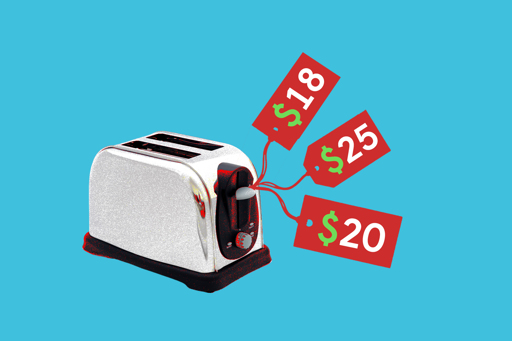



Prices are disconnected from the cost of production. The price is determined at the marketplace by the customer’s willingness to pay (according to Behavioral Economics, which is mostly applied in modern economics, as opposed to the reservation price in traditional economics).
This is also one mistake some start-up founders make when introducing their product: calculating the costs and add a certain percentage, but this is not advisable (because, among others, this cost-up pricing could result in a price for your new product that customers are not willing to pay …).
That would not work, if, say, you go to McDonald’s and buy through the app, as the McMuffin isn’t sold in advance … And even in some markets where a resale could theoretically be made (such as for concert tickets or flight tickets), it is often legally prohibited to resell a tickets above face value (that’s the case for concert tickets in the UK since the start of this year, for example) or the product is connected to your ID ( that’s the case with many airlines do with flight tickets).