

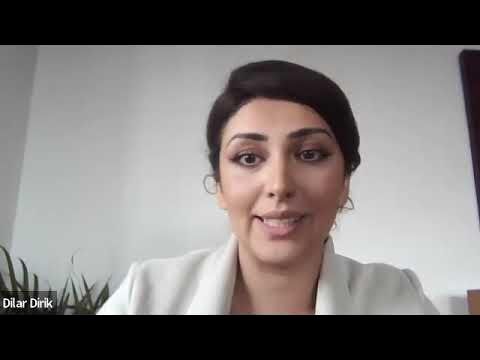
The following passage comes from the preface of Dilar Dirik’s book called “The Kurdish Women’s Movement: History, Theory, Practice” (2022)
In radical traditions, feminism is not about visibility or representation inside an unjust world; in fact, feminism should never be compatible with the dominant power-based system and its liberal discourses. I align with those who see feminism as a constantly evolving, critical, and self-critical resistance movement for justice and liberation, a method of radicalizing society’s freedom consciousness to organize the world differently. Chandra Talpade Mohanty (2003) refers to ‘anticapitalist transnational feminist practice’ as a way of building ‘noncolonizing’ bridges across particular and universal struggle contexts. As it is not a classical national liberation struggle, but a mass movement with a claim to a more universal struggle against dominant systems of power, the revolutionary Kurdish women’s movement’s experience and analyses are valuable to anyone interested in anti-colonial and anti-capitalist politics, feminism from below, revolutionary social change, climate justice, system-critical theory, and democracy without the state. In this sense, unconcerned with exceptionalizing Kurdish women, I hope that this book can be one of the many efforts to build transnational alliances for peace and justice against the systems that colonize, devalue, and destroy life.
Note: Even tho this video was posted 3 months ago, it looks like it was recorded in 2022. I assume this because in the intro of this video it is said that her book mentioned above was not yet published.
Ill save the video.
The word nation was made to connect people to the beatling, so for this reason I think it should be weeded out, but I dont know what to replace it with. Im tasting root at the moment. A child born from an syrian and a norwegian parent could then say their roots are of syria and norway. But Im still thinking about whether it makes sense.