PC gaming should head towards 21:9 for ubiquitous support in games. 1680x720, 1920x800, 2560x1080, 3440x1440, …
Also OLED or higher density dimming zones. Full coverage DCI-P3. Then color reproduction and brightness highlights will also be hitting a point of diminishing returns. Then it’ll be onto VR/head mounted displays where density and brightness/contrasts will better show off
I early adopted 3840x2160 way back and recently went with a no name $200 3440x1440 monitor in 2024 and that was a way better upgrade than 1080p to 2160p. I’d take 2560x1080 over 3840x2160. 8k has no relevance until it’s the best value for up to $1000 for a 65" TV


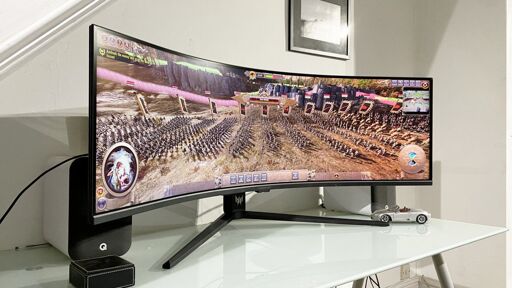
PC gaming should head towards 21:9 for ubiquitous support in games. 1680x720, 1920x800, 2560x1080, 3440x1440, …
Also OLED or higher density dimming zones. Full coverage DCI-P3. Then color reproduction and brightness highlights will also be hitting a point of diminishing returns. Then it’ll be onto VR/head mounted displays where density and brightness/contrasts will better show off
I early adopted 3840x2160 way back and recently went with a no name $200 3440x1440 monitor in 2024 and that was a way better upgrade than 1080p to 2160p. I’d take 2560x1080 over 3840x2160. 8k has no relevance until it’s the best value for up to $1000 for a 65" TV
Check out the next evolution, PeLED or PeNC. Perovskite LED or Perovskite Nano Crystal.
Should oulast LED 3x+, better brightness, better contrast, way better refresh rates with less ghosting, smaller pixel/higher density, etc.